
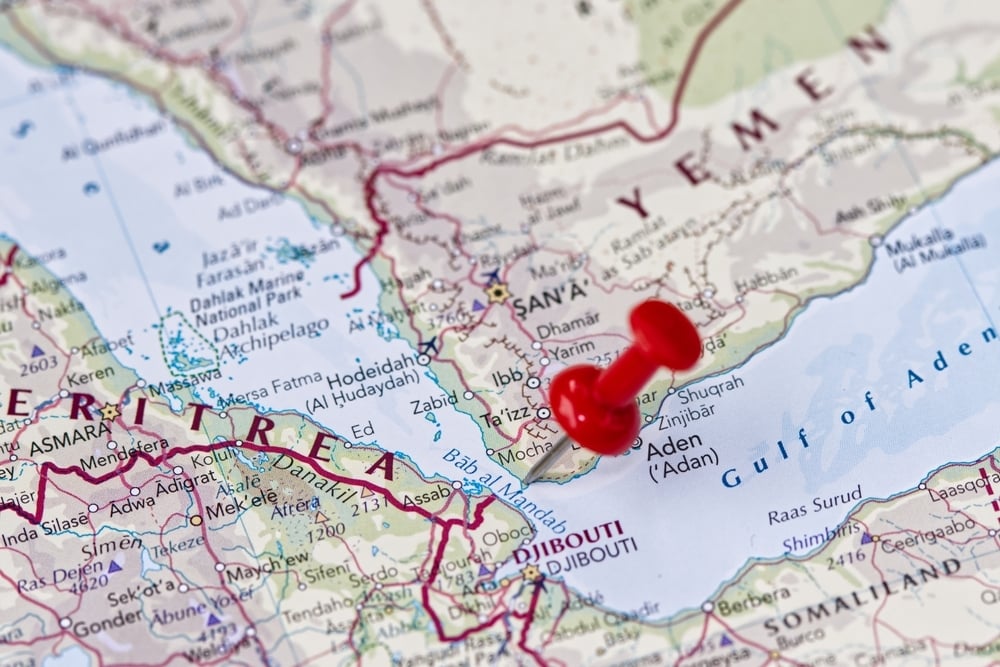
Iran has reportedly directed Yemen’s Houthi movement to prepare for the closure of the Red Sea oil route, a crucial global energy supply channel, in the event of a U.S. attack on Iranian power infrastructure.
Tehran has relayed this strategy to the Houthi allies, posing a significant new threat to global energy supplies. The Houthi group has reportedly finished preparations to assault shipping by positioning missiles and drones near Bab el-Mandeb Strait, the Red Sea gateway, and is now waiting for the go-ahead, Reuters reported on Thursday.
Representatives of Iran’s Islamic Revolutionary Guard Corps (IRGC) in Yemen will reportedly decide when to close the Bab el-Mandeb Strait, as per the report. The development follows the Houthis’ missile attacks on Saudi Arabia, ending a four-year truce after accusing Riyadh of bombing an airport under their control.
Calling Hormuz the “invincible red line,” Iran also warned that key targets in the Middle East would be “crushed under the steel blows” if President Donald Trump‘s threats to target the country’s infrastructure are carried out, reported CNBC, citing a statement by a top Iranian military official published on Telegram on Thursday.
Oil Risks Mount As Tensions Escalate
Iran’s retaliatory threat comes after President Donald Trump said he would not rule out a limited U.S. ground campaign in Iran, following recent strikes near Kharg Island. He emphasized that military strength is the only effective way to negotiate with Tehran and threatened to target Iran’s power plants and bridges if it refuses to enter nuclear talks with Washington.
With the Strait of Hormuz already closed, any Houthi attacks in the Red Sea would disrupt the Middle East’s two key oil export routes at the same time, intensifying the global energy crisis and escalating Iran’s conflict with the U.S.
Torbjorn Solvedt, analyst at Verisk Maplecroft, told Reuters that escalating fighting between the Houthis and Saudi Arabia could threaten Red Sea oil export infrastructure and shipping, jeopardizing the region’s only major alternative to the Strait of Hormuz for crude exports.
These escalating tensions have had a significant impact on oil markets. At the time of writing, Brent crude futures were trading 0.96% higher at $81.84 per barrel, while West Texas Intermediate (WTI) crude futures increased 1.41% to $80.70 per barrel.
Disclaimer: This content was partially produced with the help of AI tools and was reviewed and published by Benzinga editors.
Image via Shutterstock